

Non-thermal plasma. Seven species. Whole-room reach.
Most air purifiers fight pathogens only inside their own chamber. AirROS makes reactive oxygen species leave the unit and keep working throughout the room — sanitizing the air and every surface in the space.
Two phases. Continuous. No downtime.
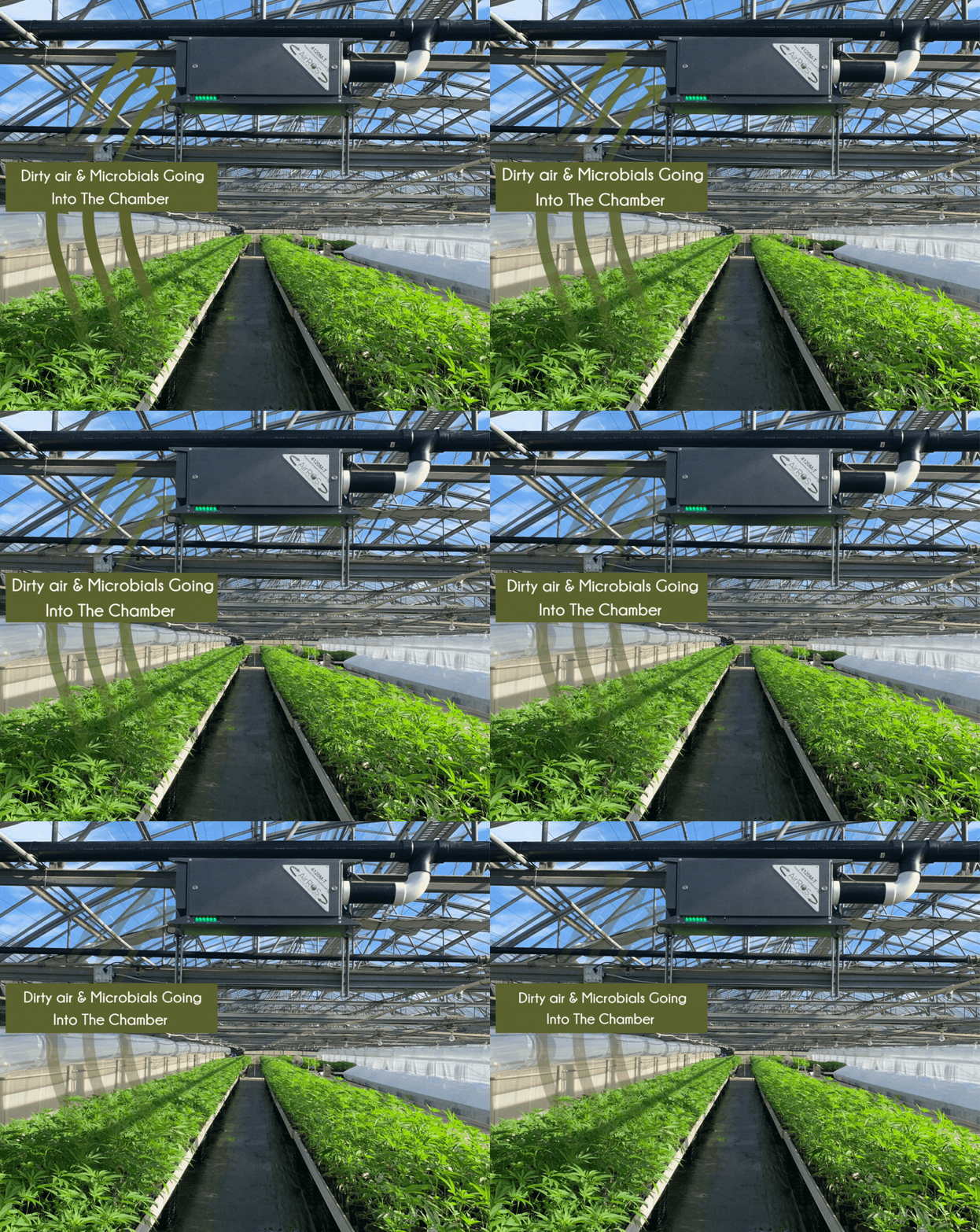
Electricity → plasma → 5 species.
High-voltage, high-frequency controlled pulses — but very low amperage — ionize ambient air into non-thermal plasma. Atomic oxygen, singlet oxygen, hydroxyl radical, superoxide and peroxynitrite break carbon-to-carbon bonds and neutralize pathogens on contact.
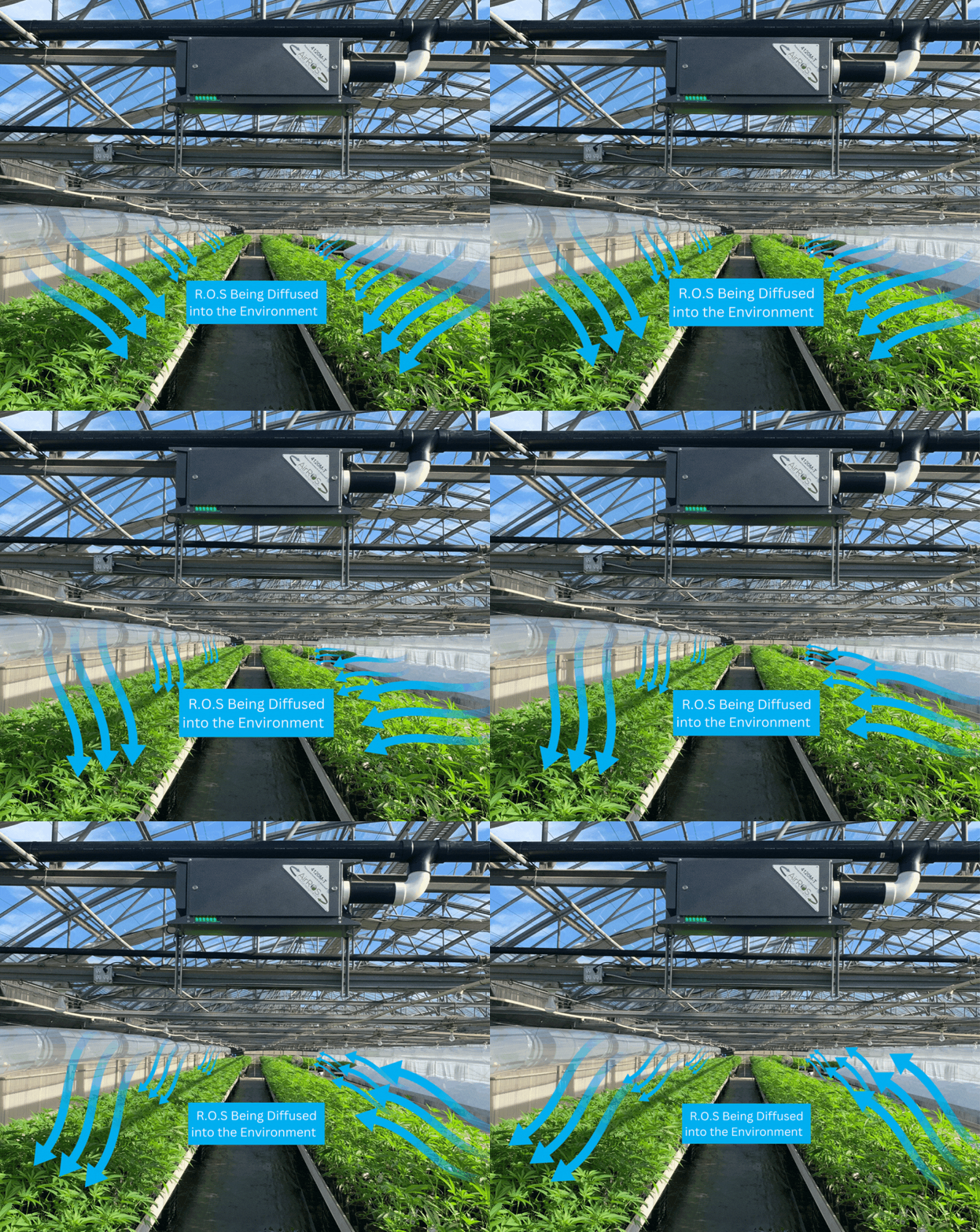
Two species leave. Surfaces stay clean.
Gas-phase hydrogen peroxide (H₂O₂) and trace ozone (≤ 50% of OSHA’s 24-hr limit) diffuse into the room. They continue sanitizing surfaces and air far from the unit — something UV, HEPA, ionizers and PCO all fail at.
Seven oxidizers. Each one deliberate.
Five species work inside the reaction chamber. Two leave the unit and extend sanitation into the room. Each species is tuned for where it does the most work.
- O01Atomic oxygen
Phase 1 — destroys carbon-to-carbon bonds in the reaction chamber.
- ¹O₂02Singlet oxygen
Phase 1 — high-energy, short-lived oxidizer inside the chamber.
- •OH03Hydroxyl radical
Phase 1 — the most potent atmospheric oxidizer. Kills on contact.
- O₂⁻04Superoxide
Phase 1 — breaks microbial cell walls inside the reactor.
- ONOO⁻05Peroxynitrite
Phase 1 — cross-reacts with pathogens, disrupts protein integrity.
- H₂O₂06Hydrogen peroxide (gas)
Phase 2 — leaves the unit. Continues to sanitize surfaces + ambient air.
- O₃07Ozone (trace, sub-OSHA)
Phase 2 — 50% or less of OSHA 24-hr limit. Extends reach throughout the room.
Destroy. Purify. Defend.
Side-by-side with the six technologies operators ask about most. Energy and cost rows are measured at 30,000 cft of coverage — AirROS draws 68 W while UV-C draws 985 W to do less work.
Competitive Technology · 2025
| Capability | AirROS | Ozone | UV-C | PCO / PHI | HEPA | Ionizer | Chemicals |
|---|---|---|---|---|---|---|---|
| Surface sanitation | ✓ | ✓ | ✕ | ✕ | ✕ | ✕ | ✓ |
| — Molds | ✓ | ✓ | ✕ | ✕ | ✕ | ✕ | ✓ |
| — Bacteria | ✓ | ✓ | ✕ | ✕ | ✕ | ✕ | ✓ |
| — Viruses | ✓ | ✓ | ✕ | ✕ | ✕ | ✕ | ✓ |
| Airborne sanitization | ✓ | ✓ | ✓ | ✓ | ✓ | ✓ | ✓ |
| — Molds | ✓ | ✓ | ✓ | ✓ | ✓ | ✓ | ✓ |
| — Bacteria | ✓ | ✓ | ✓ | ✓ | ✓ | ✓ | ✓ |
| — Viruses | ✓ | ✓ | ✓ | ✓ | ✓ | ✓ | ✓ |
| Ethylene / ripening control | ✓ | ✓ | ✕ | ✕ | ✕ | ✕ | ✕ |
| Active antimicrobial compounds | 7 | 1 | 0 | 1 | 0 | 0 | 1 |
| Dynamic control | ✓ | ✕ | ✕ | ✕ | ✕ | ✕ | ✕ |
| Safe while people present | ✓ | Unsafe | ✓ | ✓ | ✓ | ✓ | ✓ |
| Energy consumption · 30,000 cft | 68 W | 435 W | 985 W | 765 W | 120 W | 662 W | — |
| Energy cost / year · 30,000 cft | $63 | $403 | $913 | $709 | $111 | $614 | — |
Certified. Audited. Approved.
GRAS — Generally Regarded As Safe — for ozone in food processing (issued June 26, 2001).
Approved for use on meats and poultry (December 2001).
Operates at ≤ 50% of OSHA 24-hr ozone exposure limit (0.050 ppm cap).
Within work-load ozone limits (light 0.100 · mod 0.080 · heavy 0.050 ppm).
Complies with 8-hr mean daily max 0.050 ppm ozone standard.
Meets all organically approved regulations for cultivation.
Audited. Approved. Built to survive scrutiny.
 ULFile E526152 · CCN AGGZ
 EPAEquipment bears EPA establishment #
 CEEU low-voltage + EMC
 UCKAUK electrical safety
 RCMAustralia + NZ compliance
 RoHSHazardous substance limits
FDA GRAS · USDA Approved · OSHA + ACGIH + WHO compliant · Organic approved
Talk to engineering — not sales.
Compatibility with your BMS? PLC integration? Wet-environment install? Send the question — our engineers reply directly. No filter.